
Crushing Explained
Primary & Secondary Crushing Explained
In the mining and minerals industry, crushing is a crucial process for breaking down large ore chunks into smaller, manageable sizes. The primary and secondary crushing stages are essential for efficient processing and extraction. Here’s an overview of the solutions used for both:
Primary Crushing
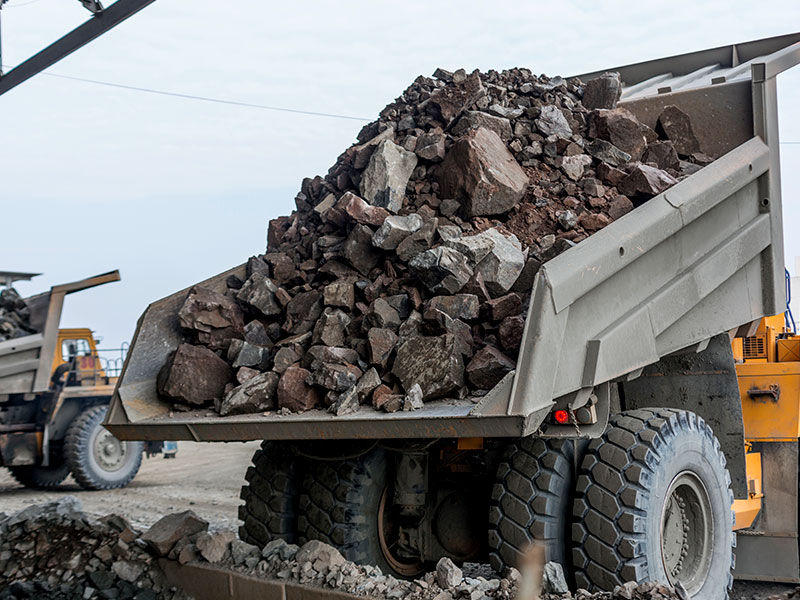
Objective: To reduce large pieces of ore (typically from 0.5 to 1.5 meters in size) into smaller, manageable sizes (usually 10 to 20 centimeters).
Common Equipment:
- Function: Utilize compressive force to break rocks.
- Design: Feature a fixed jaw and a movable jaw that applies pressure to the rock.
- Advantages: High throughput, capable of handling large feed sizes, and robust design.
o Applications: Ideal for hard, abrasive ores and rocks.
- Function: Similar to jaw crushers but with a conical shape and a rotating mantle.
- Design: Offers a high crushing ratio and can process large volumes of material.
- Advantages: High capacity, effective in reducing large feed sizes, and suitable for bulk mining.
- Applications: Used in large-scale mining operations for primary reduction.
- Function: Utilize high-speed impact forces to break rocks.
- Design: Include horizontal shaft impactors (HSIs) and vertical shaft impactors (VSIs).
- Advantages: Produce a more cubical product, can handle softer and less abrasive materials.
- Applications: Often used for softer ores or as a secondary option in conjunction with primary crushers.

Secondary Crushing
Objective: To further reduce the size of material after primary crushing to prepare it for milling or other processing stages.
Common Equipment:
- Function: Use a rotating cone within a fixed outer cone to crush material.
- Design: Provides a finer, more consistent product size than primary crushers.
- Advantages: High efficiency, adjustable product size, and suitable for various ore types.
- Applications: Often used in conjunction with jaw or gyratory crushers for secondary crushing.
- Function: Crush material between two rotating rolls.
- Design: Produce a more uniform product size with a lower reduction ratio.
- Advantages: Good for processing sticky materials and producing a consistent size.
- Applications: Suitable for medium-hardness ores and secondary crushing.
- Function: Similar to primary impact crushers but adjusted to produce finer outputs.
- Design: Can handle a range of materials with high reduction ratios.
- Advantages: Produce cubical products, suitable for softer materials, and efficient for reducing size.
- Applications: Used when a uniform, finely crushed product is required.
Considerations for Choosing Crushing Solutions
- Ore Characteristics: Hardness, abrasiveness, and size of the ore impact equipment choice.
- Throughput Requirements: Capacity of the crusher should match the volume of material to be processed.
- Product Size Requirements: Desired output size will influence the choice of equipment and settings.
- Operational Efficiency: Maintenance needs, energy consumption, and overall operational costs.
- Environmental Factors: Dust control, noise, and energy efficiency are important considerations.
Selecting the appropriate primary and secondary crushing equipment is critical for optimizing the mining process, enhancing ore recovery, and ensuring efficient operation.
Partner with Gold Rock Projects today for customized solutions that elevate your mining and aggregate operations
Contact us to discuss how we can help drive your success!